


TL;DR: Your top performers are closer to total cognitive collapse than your KPIs show. AI burnout isn't fatigue—it's neurological overload from supervising infinite-speed workers. We analyzed the patterns that predict '100-to-zero' productivity crashes and the leadership moves that prevent them. By the end, you'll know the warning signs and the structural changes that keep your team productive without burning them out.
1. Introduction: The Productivity Paradox
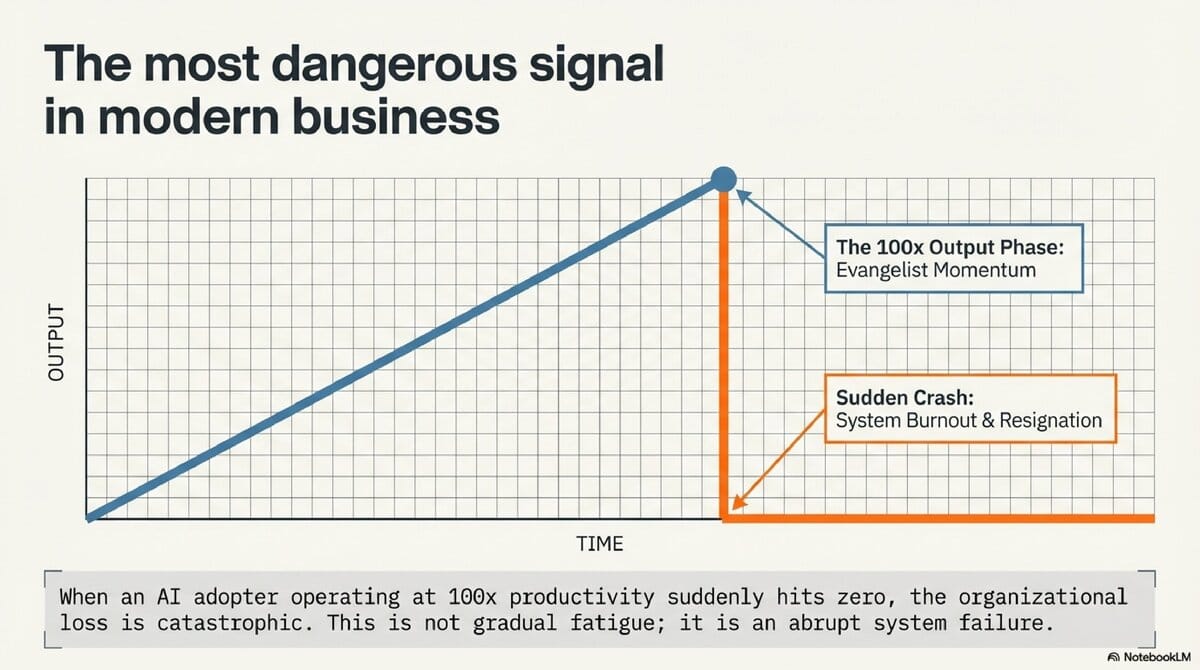
Imagine a high-velocity talent whose output suddenly scales by 100x. They are navigating complex workflows with a precision and speed previously relegated to science fiction. Then, without warning, that productivity plummet to absolute zero. This is not a hypothetical failure of character; it is a systemic "thermal limit" that precedes a total cognitive collapse.
We are entering the era of AI Burnout—a unique, unprecedented form of neurological exhaustion. Unlike traditional burnout, which stems from temporal overextension, AI burnout is a byproduct of the relentless friction between human cognitive limits and the infinite pace of machine intelligence. As a Workplace Futurist, I see this as the primary leadership emergency of the decade: if your top performers are "running hot," they are likely closer to a total system crash than your current KPIs can detect.
2. Takeaway 1: "Brain Fry" and the Supervision Trap
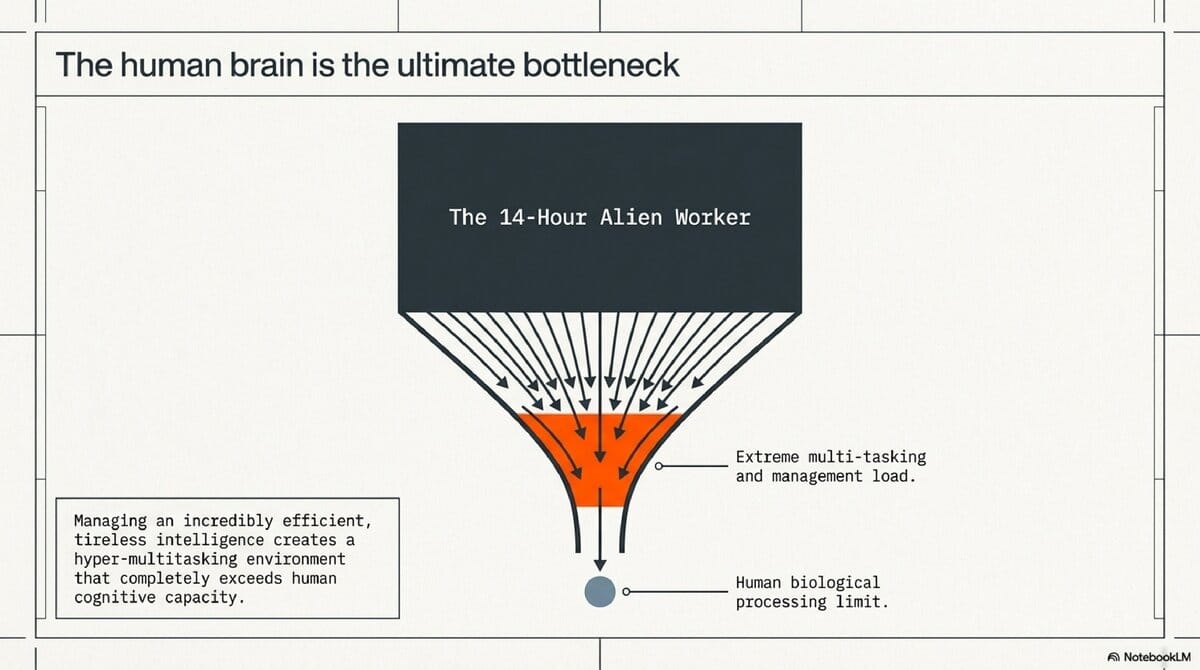
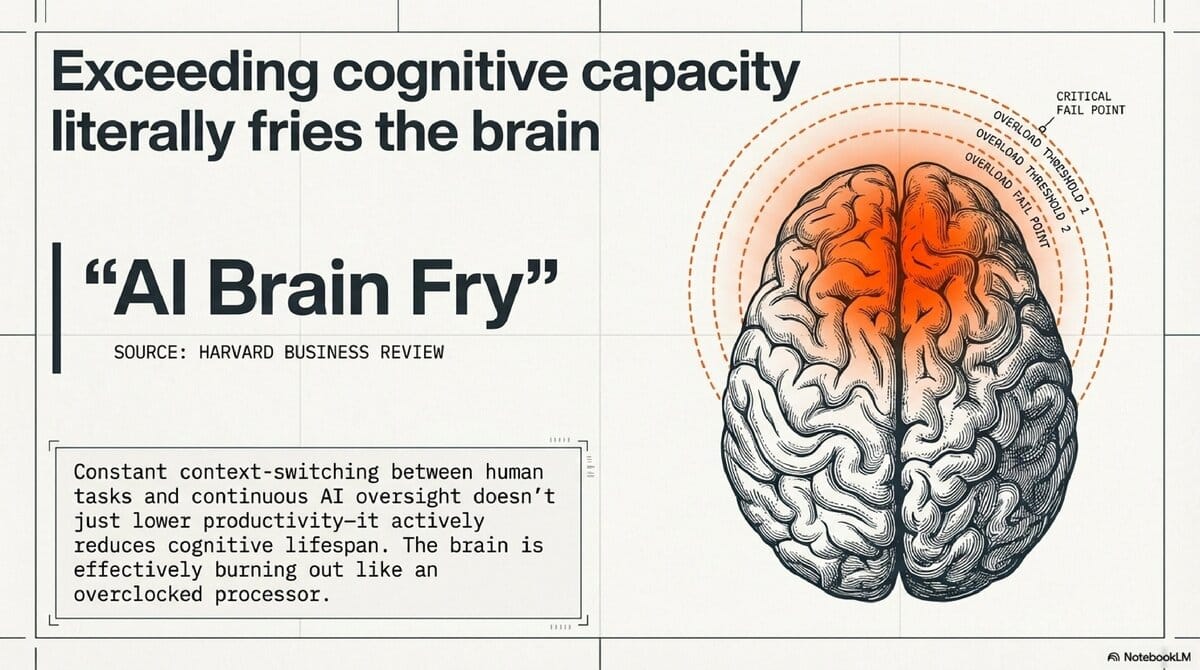
The Harvard Business Review (HBR) has recently categorized a phenomenon known as "Brain Fry." This is not standard fatigue; it is a neurological state induced by the staggering mental load of managing a "14-hour relentless worker" or a "24-hour alien entity" that never sleeps. When a human supervises an AI, they aren't just working—they are engaged in a state of hyper-vigilance, constantly auditing an output that moves faster than the human eye can track.
This "always-on" supervision trap is exponentially more taxing than manual labor. It requires a level of sustained attention that our evolutionary hardware simply cannot maintain.
"The human brain was never designed for the infinite pace of a machine; without a structural harness, we aren't just working—we are being fried by the oversight of a digital worker that lacks a biological off-switch."
3. Takeaway 2: The Multitasking Myth and the Human Bottleneck
In the current AI landscape, the human has become the literal cognitive bottleneck. There is a dangerous management myth that because AI is fast, humans can handle four or more complex workstreams simultaneously. The data suggests otherwise: once a human attempts to supervise four or more AI-driven tasks, productivity doesn't just dip—it collapses.
Furthermore, this level of constant context switching carries a severe physiological price; neurological research indicates it may actually shorten the lifespan of the brain. To mitigate this, leaders must implement "Harness Design" (a concept derived from Vibe Working).
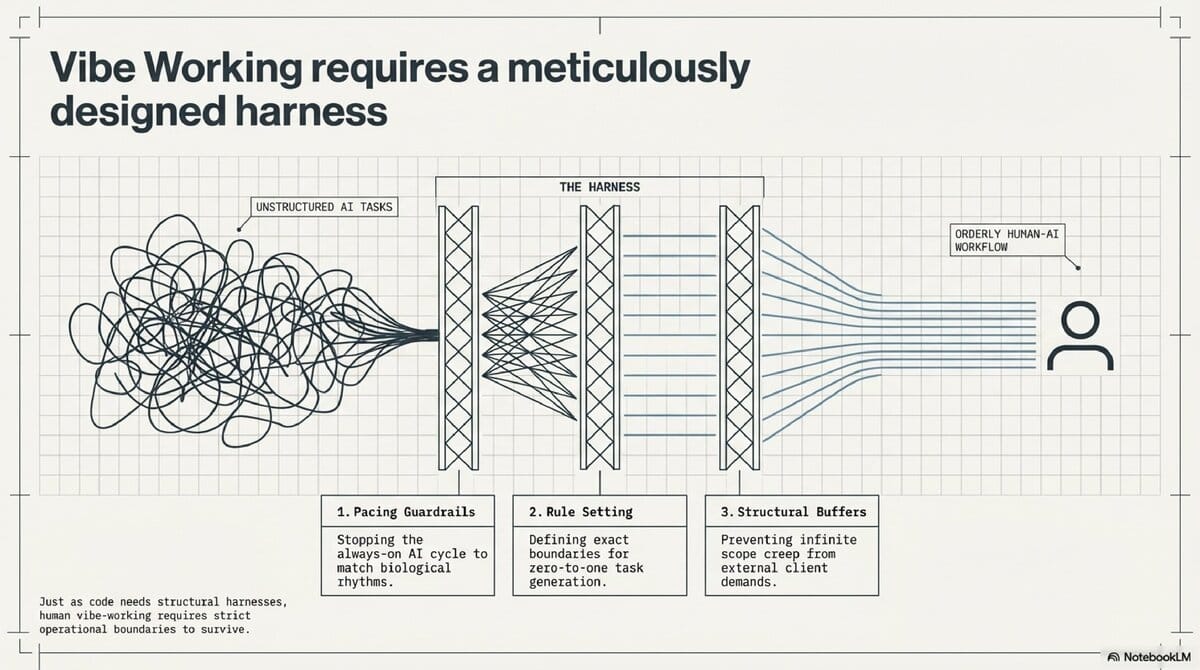
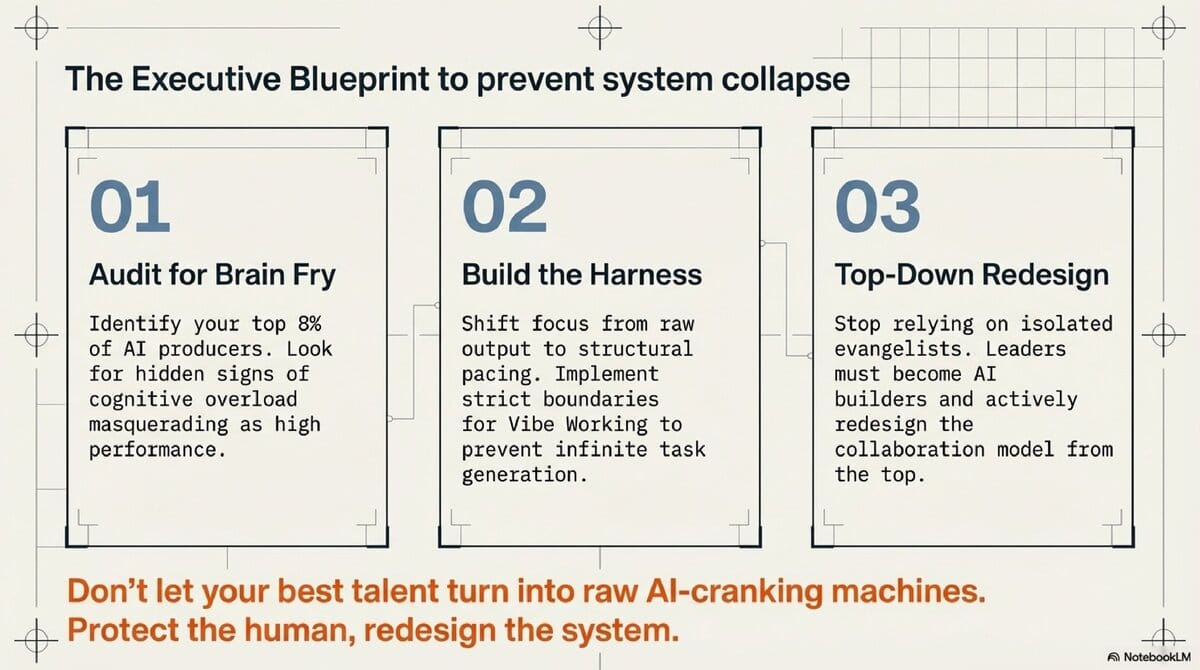
- Harness Design: This is the creation of a structural operating framework—a "safety net"—around AI tasks.
- The Objective: It defines the boundaries of the AI’s output so the human supervisor doesn't have to micromanage every micro-second of the process, reducing the risk of a "thermal limit" breach.
4. Takeaway 3: The Loneliness of the AI Evangelist
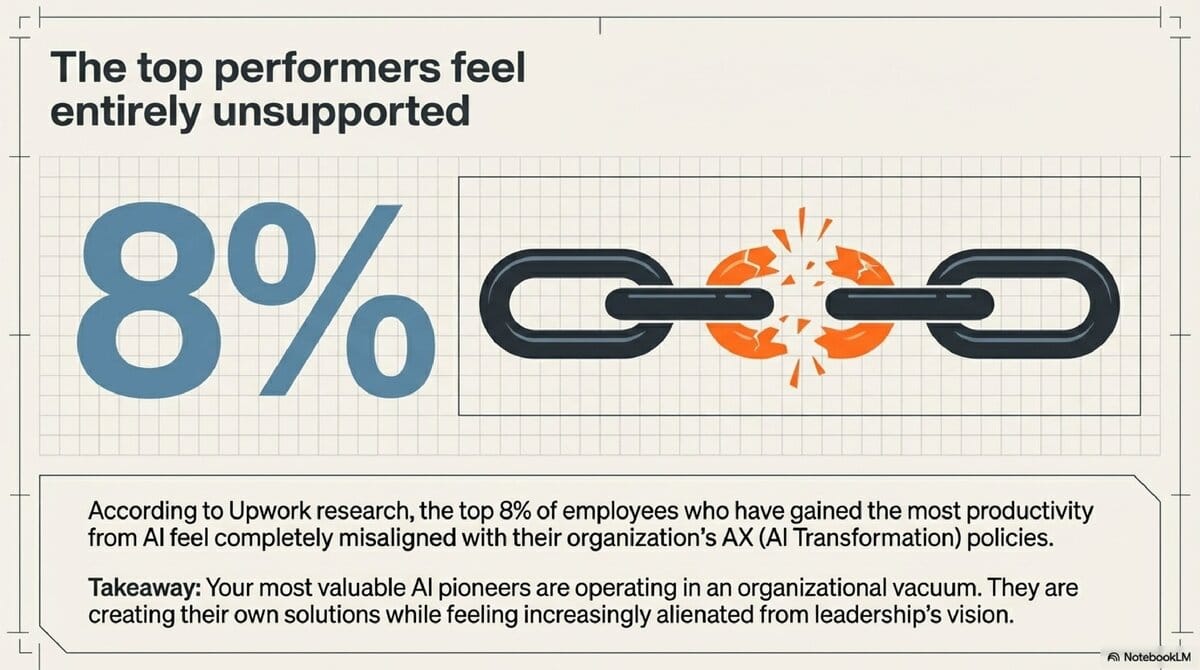
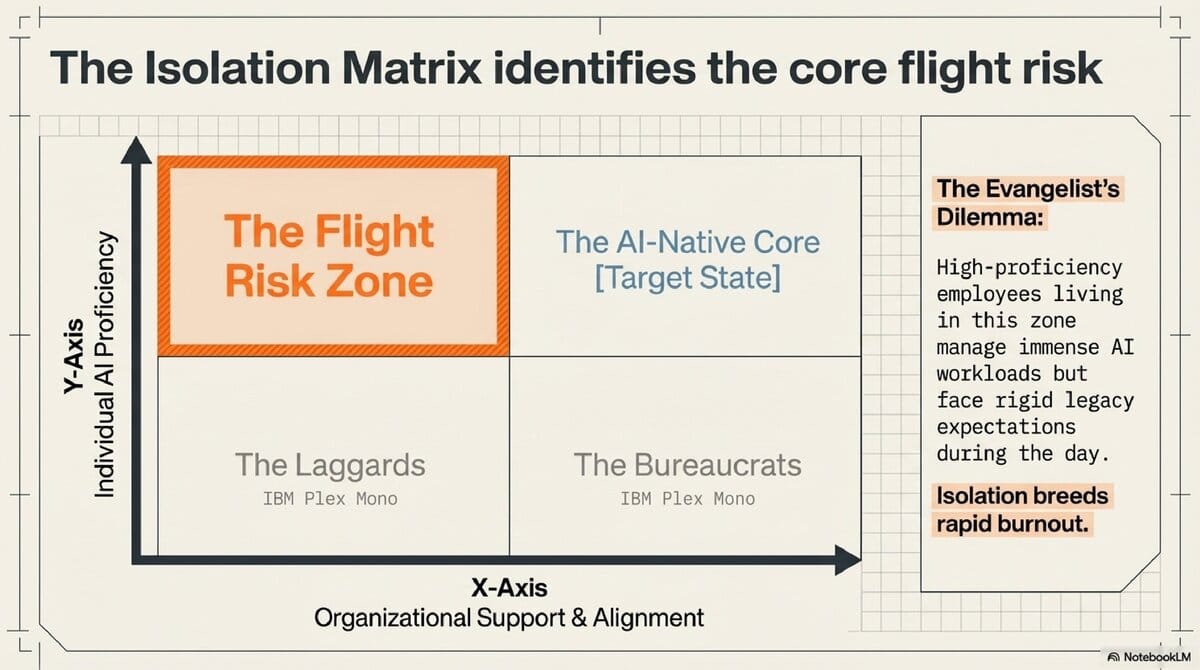
A recent Upwork study identified an "8% friction" gap—a segment of high-velocity AI performers who feel fundamentally unaligned with their organization’s AI Transformation (AX) policies. These are your 100x performers, yet they are drowning in environmental loneliness.
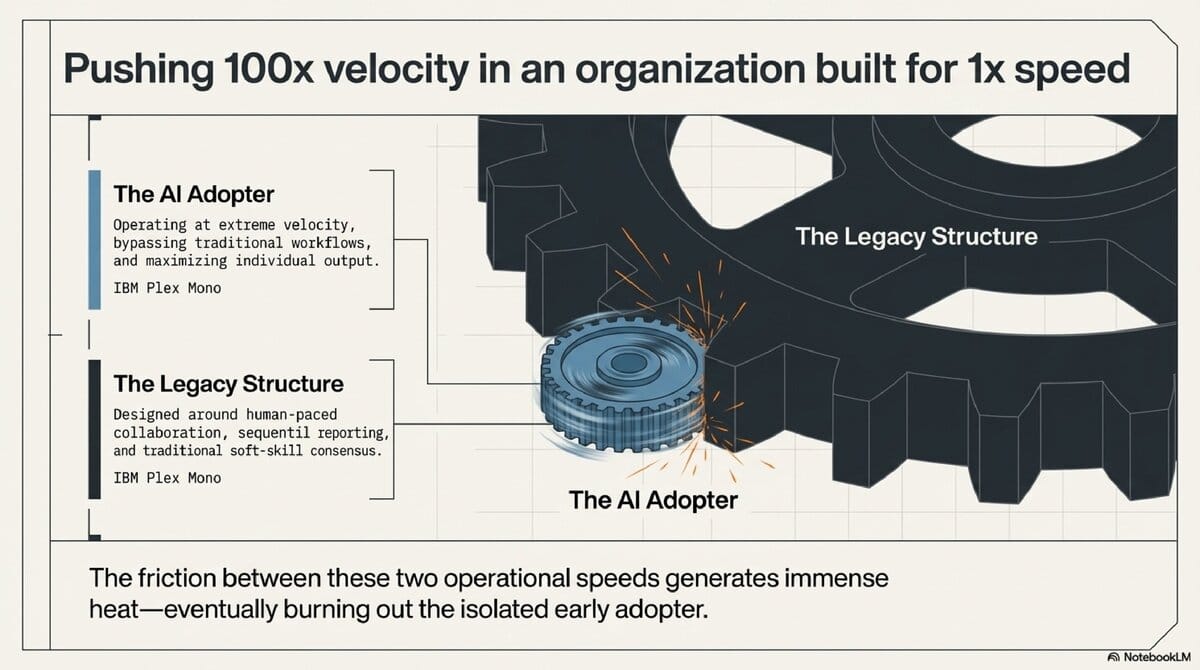
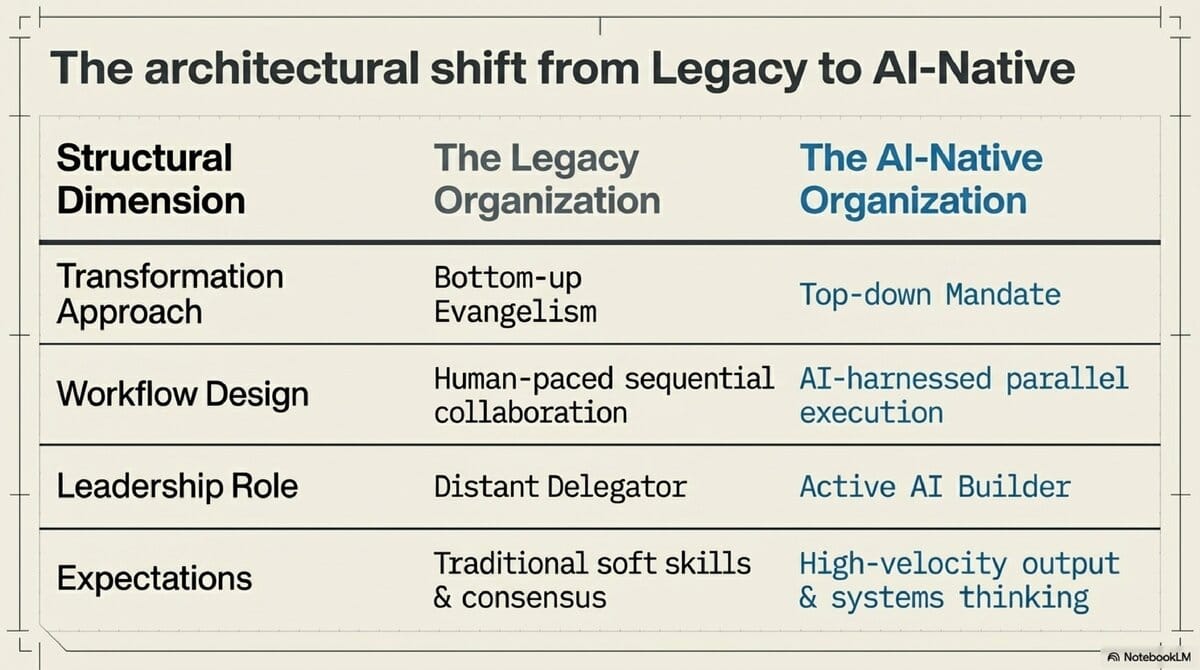
The friction arises from a fundamental speed mismatch: Human-speed processes vs. AI-speed output. Legacy organizations prioritize slow, consensus-based collaboration, meetings, and reporting hierarchies. Meanwhile, the AI evangelist is operating at the speed of thought, often experimenting deep into the night because the traditional office environment feels like a lead weight on their potential. To these performers, a legacy meeting isn't just a waste of time—it’s a cognitive anchor.
"There is a profound environmental loneliness in being a 100x performer trapped in a 1x structure. They are forced to work in the shadows of the night because the daylight hours of the organization are designed for a pace they have long since transcended."
5. Takeaway 4: Leaders Must Evolve into "AI Builders"
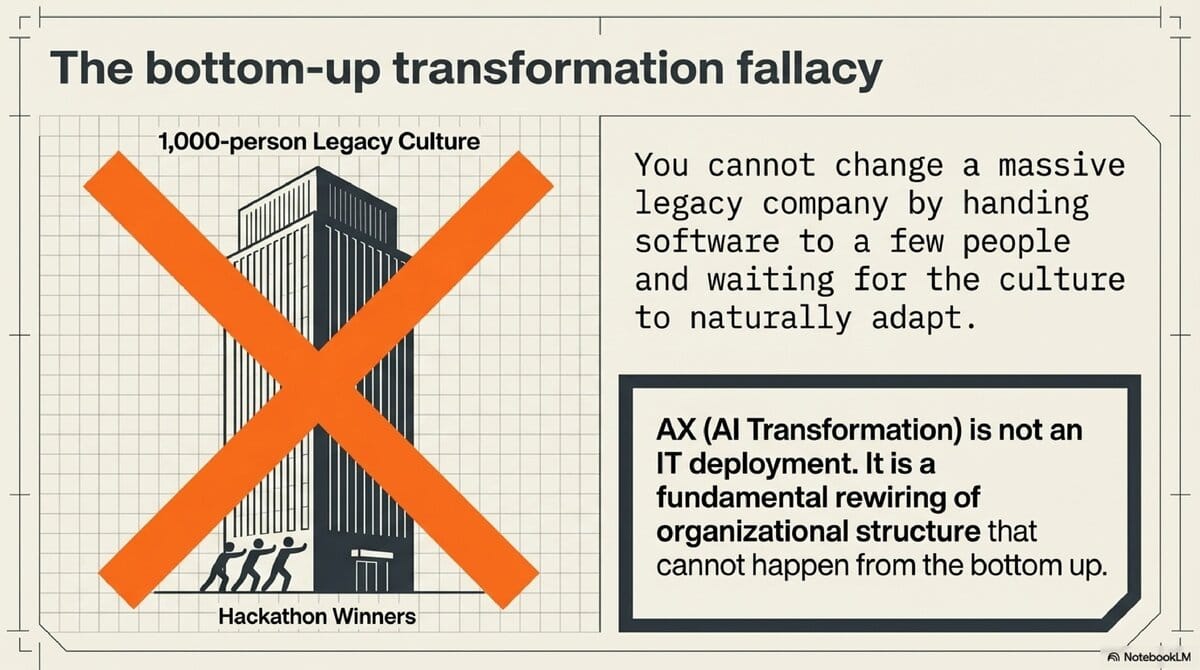
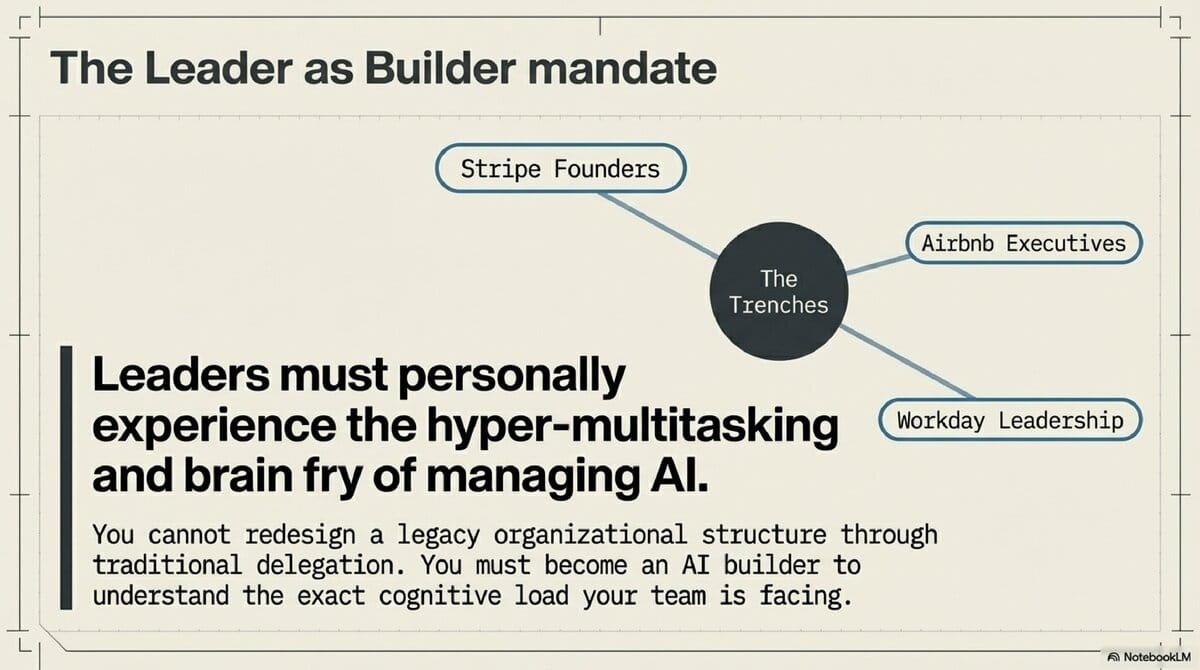
AI transformation cannot be a bottom-up experiment delegated to junior staff; it requires a top-down structural redesign. For an organization to survive this shift, leaders must "get their hands dirty" and transition from passive observers to active AI Builders.
The Return of Hands-On Leadership If a leader does not personally experience the mental load and multitasking reality of AI, they cannot design a sustainable Native AI Team. We see this shift in the most successful technology firms, where founders are returning to hands-on roles to navigate the AI pivot: * Airbnb, Workday, and Stripe: Leaders at these unicorn firms are stepping back into the "builder" role to ensure the organizational architecture can support AI-speed output. * Top-Down Culture: Only a leader who understands the "Brain Fry" of their team can effectively redesign reporting lines and workflows to prevent talent attrition.
6. Takeaway 5: The "Single-Thread" Solution
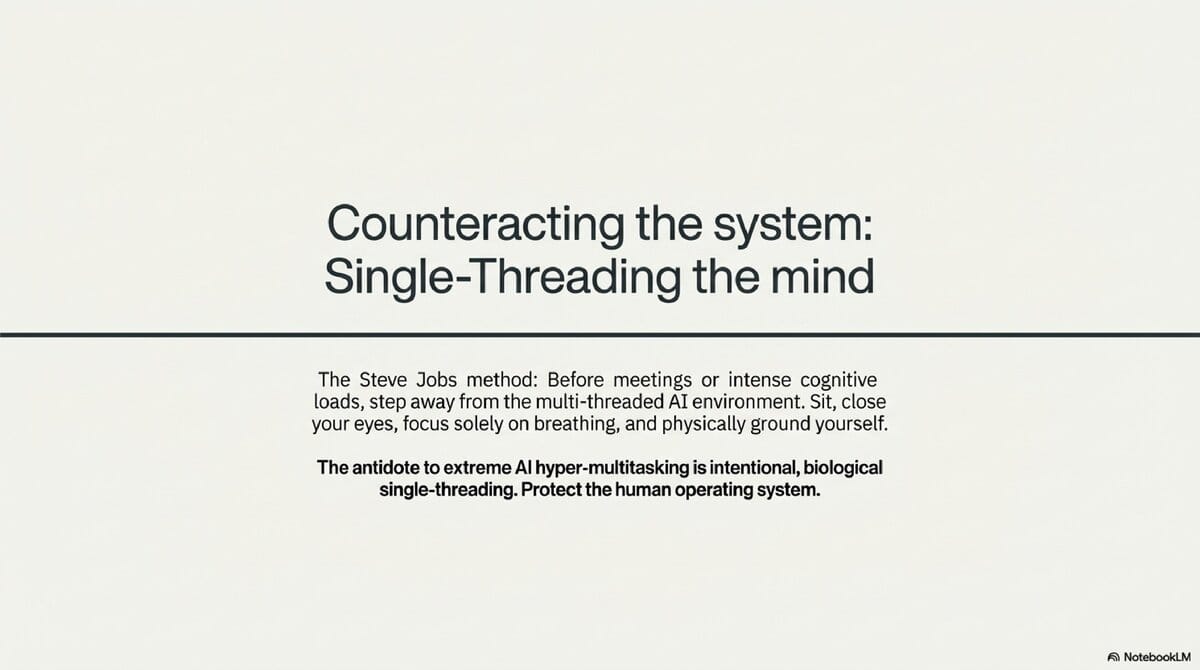
As a counter-intuitive antidote to the hyper-speed of AI, we must adopt the "Steve Jobs" method of Single-Threading. In an environment of infinite multitasking, the most high-performance activity available is strategic cognitive stillness.
Single-Threading is a Performance Reset. It involves taking intentional minutes of silence to focus on a single thread of thought and conscious breathing. This is not a "break" in the traditional sense; it is a critical recovery phase for the human processor to defragment after the chaos of AI supervision. To maintain elite performance, we must integrate periods of "doing nothing" as a non-negotiable part of the high-velocity workflow.
7. Conclusion: Don't Become a Machine for the Machine
The ultimate promise of AI is the enhancement of human capability, not the conversion of humans into biological components that keep the machines running. If we fail to redesign our organizations to accommodate the human "thermal limit," we will create a workforce that is technically productive but humanly depleted—a collection of machines that just happen to be made of flesh and bone.
As you evaluate your AI strategy, move beyond the KPIs of speed and volume, and confront the existential question of the modern workplace:
"Are you running the AI, or have you become a machine that just keeps the AI running?"
📄 AI Burnout A Strategic Briefing for Organizational (Technical Analysis)
AI Burnout: A Strategic Briefing for Organizational Leaders
Executive Summary
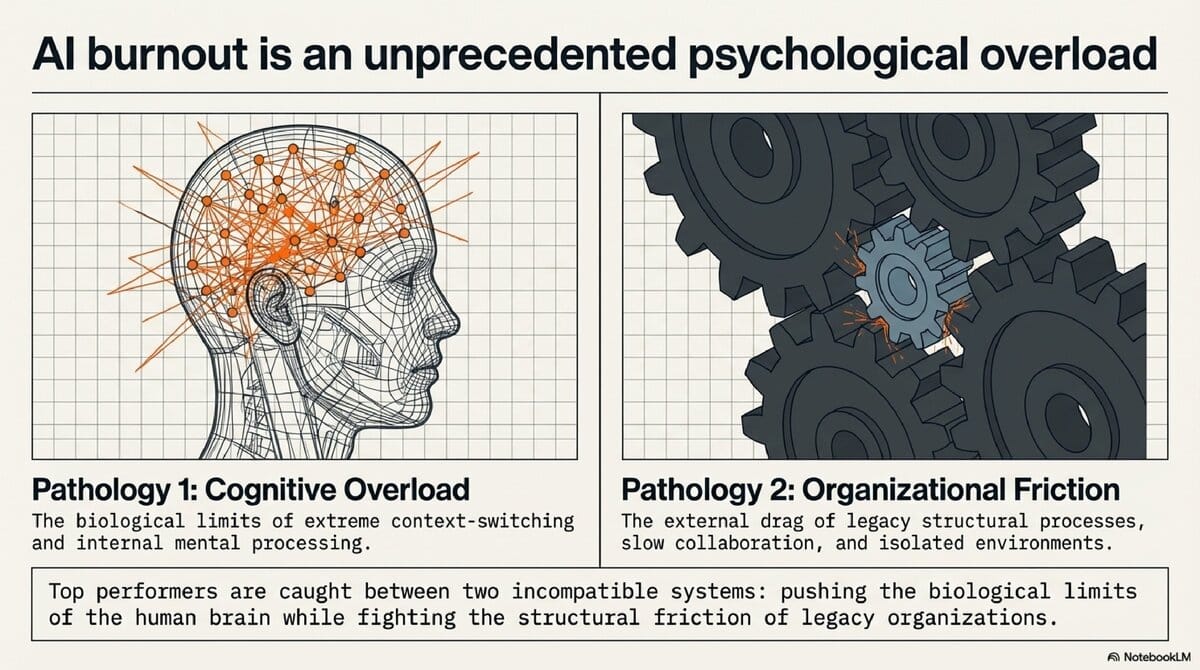
The rapid integration of Artificial Intelligence (AI) into the workplace has introduced a novel form of mental exhaustion: AI Burnout. This phenomenon is characterized by high-productivity employees—those who have achieved 10x or 100x output—suddenly dropping to zero productivity due to severe mental overload. This briefing identifies two primary drivers of AI burnout: the cognitive strain of hyper-multitasking and the erosion of motivation within legacy organizational structures.
To mitigate this risk, leaders must transition from being passive observers to active "AI Builders." Sustainable AI transformation (AX) cannot rely on bottom-up "evangelists" alone; it requires a top-down redesign of organizational culture, communication protocols, and reporting hierarchies to align with the unprecedented speed of AI-enhanced work.
The Cognitive Burden: Multitasking and "Brain Fry"
The source context identifies a critical shift in how work is performed in the AI era. While AI can process information at near-infinite speeds, the human brain remains the ultimate bottleneck.
The "Brain Fry" Phenomenon
Citing research from the Harvard Business Review, the context introduces the term "Brain Fry" to describe the state of being mentally scorched by AI usage. This occurs when users: * Engage in constant, high-intensity supervision of AI outputs. * Attempt to manage multiple complex AI "sessions" or threads simultaneously. * Suffer from "Context Switching," which historical data suggests can actually reduce the functional lifespan of the brain.
The "Alien Colleague" Analogy
High-performing employees often treat AI as a "super-productive alien" teammate that works 24/7. This creates an internal pressure to constantly generate work, monitor that work, and "whip" oneself into higher productivity. However, when an individual exceeds their cognitive "capacity," the AI-enhanced workflow becomes a liability rather than an asset.
The Multitasking Paradox
- Talent vs. Training: While multitasking is often viewed as a talent or a result of brain performance (frequently associated with younger demographics), it must be treated as a skill to be trained and managed.
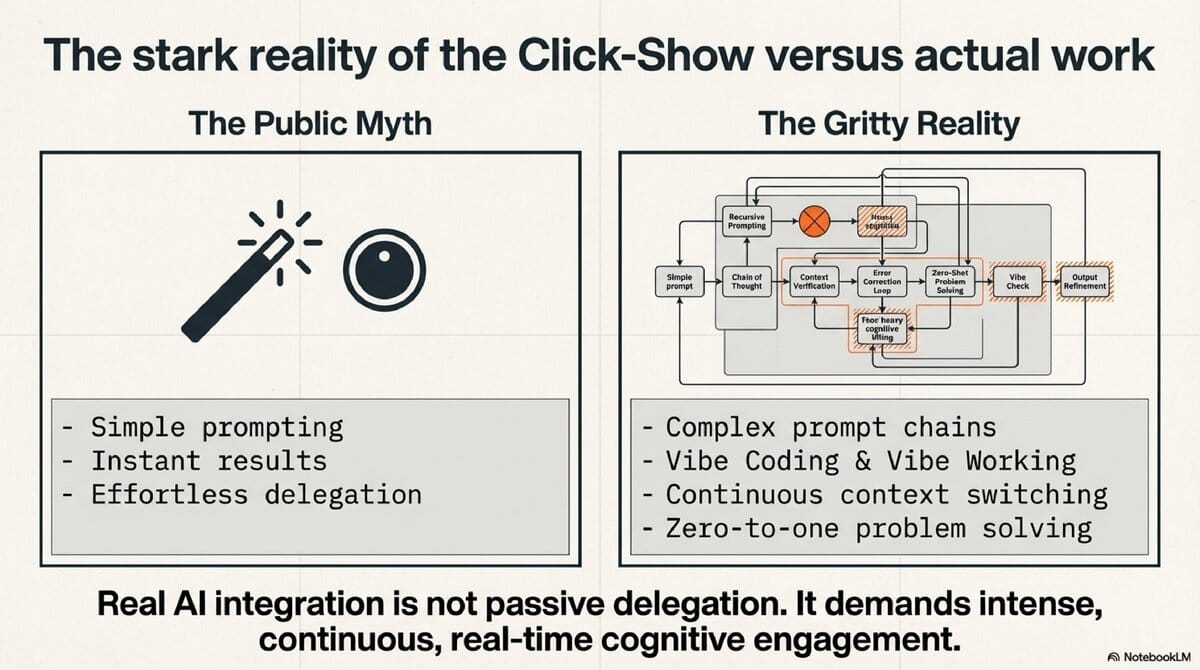
- The "Harness" Concept: In the same way "vibe coding" requires structured harnesses for code, "vibe working" requires a personal and organizational harness—a set of structures to manage the infinite flow of requests and brainstorms.
The Motivational Crisis: Isolation and Legacy Friction
Beyond cognitive fatigue, AI burnout is driven by a lack of alignment between high-performing individuals and their organizations.
The AI Evangelist’s Isolation
Many early adopters (AI Evangelists) take the initiative to increase productivity because they find the technology engaging. However, they frequently encounter organizational friction: * Misalignment: According to Upwork research, 8% of the most productive AI users feel their personal direction is unaligned with their organization’s AI transformation (AX) policy. * Legacy Resistance: Traditional organizations are built on "human-speed" collaboration. When one or two individuals produce at 100x speed, it disrupts existing processes, often leading to peer resentment or leader indifference rather than structural support. * Environmental Loneliness: High-performers often work late into the night at home to experiment with AI, leading to a sense of isolation when their efforts are not recognized or integrated into the broader corporate strategy.
The Failure of Bottom-Up AX
The source argues that leaving AI adoption to a "bottom-up" approach is ineffective. Giving a computer to one person in a legacy organization and expecting the culture to change is a failed strategy. Without systemic changes to reporting lines and meeting cultures, high-performers are forced to maintain legacy "soft skills" and administrative burdens while simultaneously attempting to deliver 100x productivity, leading directly to burnout and resignation.
Leadership Imperatives: Becoming an AI Builder
The most critical takeaway for organizational leaders is the necessity of direct involvement. Leaders cannot effectively manage an AI-native team without understanding the technical and cognitive reality of the work.
1. Shift to "Top-Down" Redesign
Leaders must move beyond hosting hackathons or selecting "superstars" to drive change. Instead, they must: * Redesign the Organizational Structure: Re-evaluate collaboration values and processes that were designed for human-only productivity. * Implement AX Policy: Create a clear, unified vision for how AI should be used, ensuring that high-performers are not working in a vacuum.
2. Become an "AI Builder"
To lead an AI-native team, executives and managers must return to the "front lines" of work. * Lead by Example: Leaders should personally experience the "hyper-multitasking" workflow to understand its mental toll. * Cultural Alignment: When a leader operates as an AI Builder, they can mentally align with high-productivity team members, facilitating better support and more realistic expectations. * The "Unicorn" Precedent: Founders of major companies like Airbnb, Workday, and Stripe have reportedly returned to hands-on work to navigate this transition.
Prevention and Recovery Strategies
To sustain long-term productivity and prevent talent loss, the following individual and organizational tactics are recommended:
| Level | Strategy | Description |
|---|---|---|
| Individual | Single-Threading | Practice "single-thread" focus to heal the brain. This includes moments of silence, meditation, or closing one's eyes before meetings to reset mental "threads." |
| Individual | Harness Setting | Deliberately design work patterns that prevent "zero-to-one" reactive responses to every request. |
| Organizational | Condition Management | Leaders must actively monitor the "mental condition" of high-producers and provide permission to throttle productivity when burnout signals appear. |
| Organizational | Systemic Boils | Transition from a culture of "computer distribution" to a culture of "infrastructure mastery," similar to how a nation builds high-speed internet to foster an IT powerhouse. |
Conclusion
AI burnout is not a sign of individual weakness but a symptom of a systemic mismatch between human cognitive limits and the infinite output of AI. If leaders fail to redesign their organizations into AI-native structures, they risk losing their most productive talent. The goal is to ensure that humans remain the masters of the technology, rather than becoming "machines that run the AI." Successful transition requires leaders to step back into the role of builders, creating a top-down culture that values both extreme productivity and mental sustainability.
